Antique Jewelry Periods
Antique jewelry is generally defined as 100 years old or more, vintage jewelry as at least 20 years old, and estate jewelry as any piece that has been previously owned, whatever its age. Within those broad labels, jewelers divide the last three centuries into distinct periods, each with its own materials, motifs, and construction methods. This guide walks through every era we carry, with dates, defining characteristics, and a link to the matching collection.

Georgian Jewelry (1710s to 1830s)
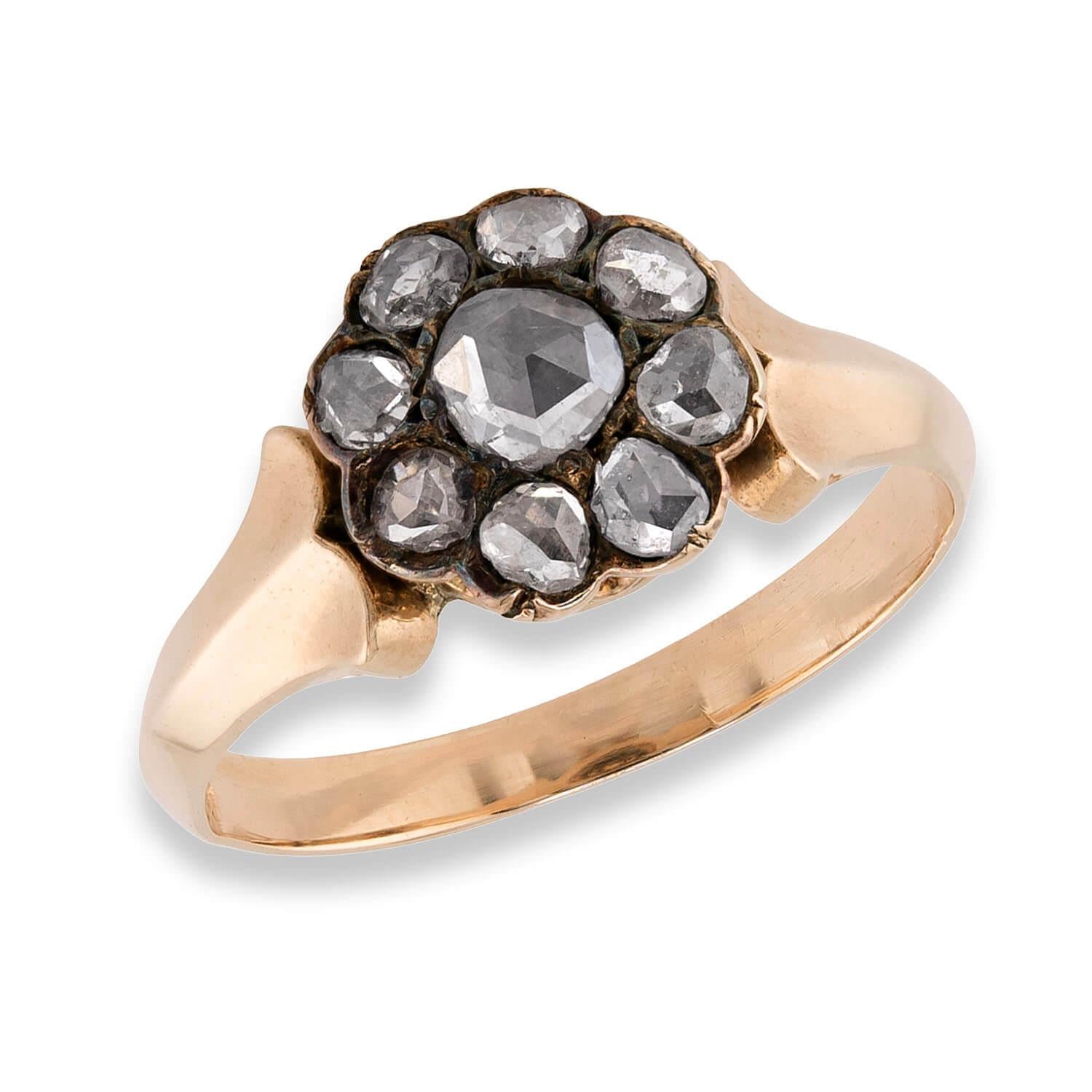
The Georgian period spans the reigns of four King Georges and predates machine production entirely. Every piece was made by hand, so quality varies from one to the next, and closed-back settings with foil behind the stones are a reliable tell. Nature-inspired motifs such as leaves, birds, and floral sprays are common, along with rose-cut and old mine-cut diamonds set in silver over gold. Because so few pieces survived being melted down or reset, Georgian jewelry is the rarest of any period.

Early Victorian Jewelry (1830s to 1850s)
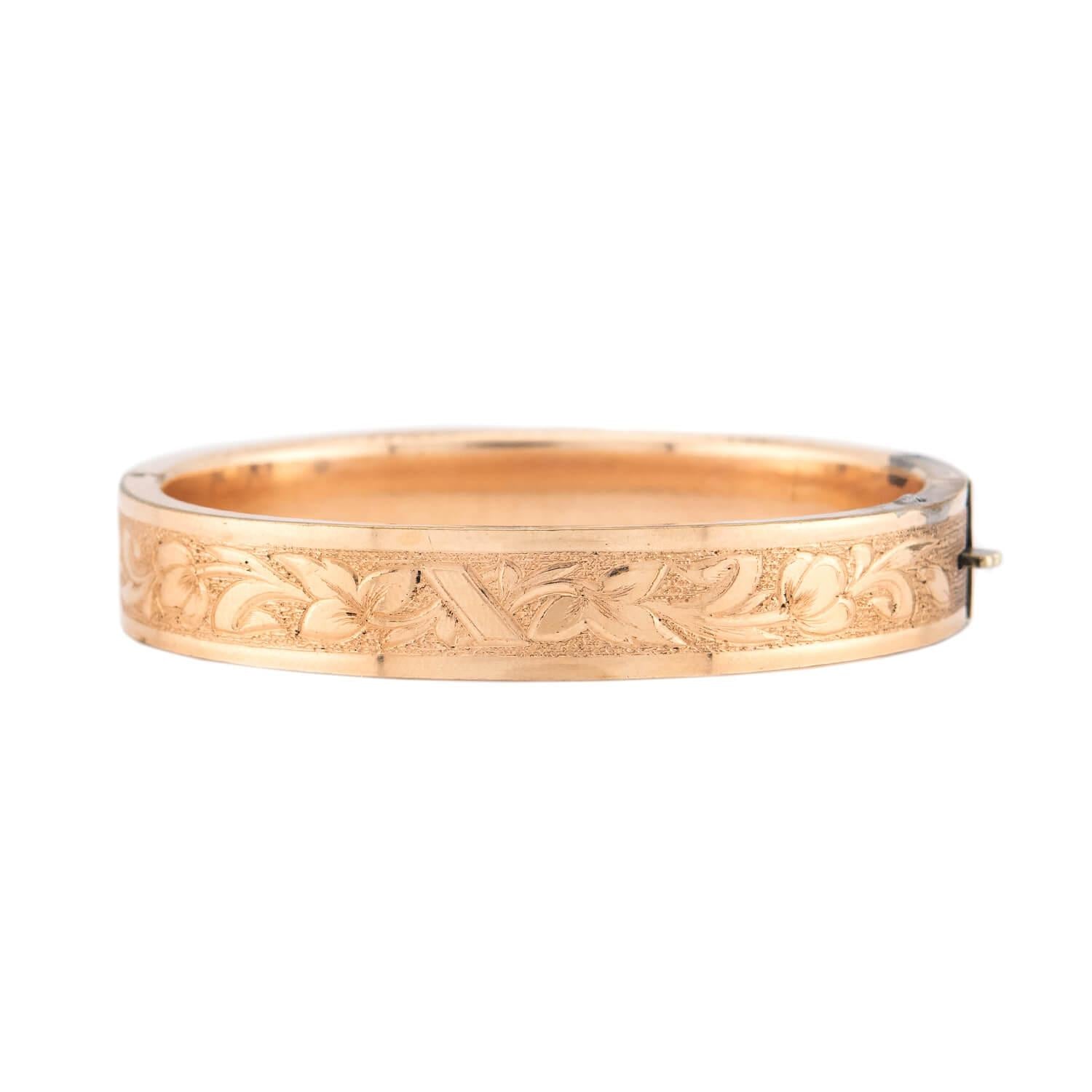
Queen Victoria took the throne in 1837 and the first decades of her reign, often called the Romantic period, carried the Georgian love of nature forward. Early Victorian jewelry features delicately etched gold with flowers, vines, and serpents, along with lockets and brooches that held hair or portraits of loved ones. Colored gemstones and diamonds were largely reserved for evening wear, while seed pearls, turquoise, and coral appeared during the day.

Mid-Victorian Jewelry (1860s to 1880s)
Prince Albert died in 1861 and the Queen entered a period of mourning that reshaped fashion across Britain and America. Victorian mourning jewelry from these decades uses heavy, dark materials such as jet, onyx, black enamel, vulcanite, garnet, and amethyst, often with woven hair or a memorial inscription. Alongside the somber pieces, the Grand period also produced bold Etruscan and Egyptian revival designs in high-karat gold.
Shop Victorian jewelry or Browse mourning jewelry

Late Victorian Jewelry (1880s to 1900s)
The Late Victorian or Aesthetic period lightened the mood. Jewelers turned to diamonds and bright, feminine gemstones such as sapphire, peridot, spinel, and opal, set in smaller and more wearable pieces. Star and crescent motifs, insects, and celestial designs were everywhere, and elaborate hat pins became a fashion staple as hats grew larger.

Art Nouveau Jewelry (1890s to 1910s)
Art Nouveau was a short, intense movement led by René Lalique in France and Louis Comfort Tiffany in America. Its jewelry favors flowing, organic lines drawn from flowers, dragonflies, butterflies, and the female form, rendered in colorful plique-à-jour and enamel work. Artistry mattered more than carat weight, so moonstone, opal, horn, and glass appear as often as diamonds.

Edwardian Jewelry (1900s to 1910s)
The Edwardian period began when Queen Victoria died in 1901 and her son Edward VII became king. Platinum came into wide use for the first time, allowing jewelers to create lace-like filigree, millegrain edges, and garland, bow, and ribbon designs that look almost weightless. Diamonds and pearls dominate, with emeralds, rubies, and sapphires as accents. In France the same style is known as Belle Époque.

Art Deco Jewelry (1920s to 1930s)
Art Deco jewelry is famous for geometric symmetry, sharp lines, and strong color contrast. Platinum and white gold frame calibre-cut sapphires, emeralds, rubies, onyx, and diamonds in stepped and angular patterns. Long sautoir necklaces and chokers suited the dropped waistlines of the day, bracelets were stacked several at a time, and costume pieces in Bakelite, celluloid, and enamel made the look accessible to everyone.

Retro Jewelry (1940s to 1950s)
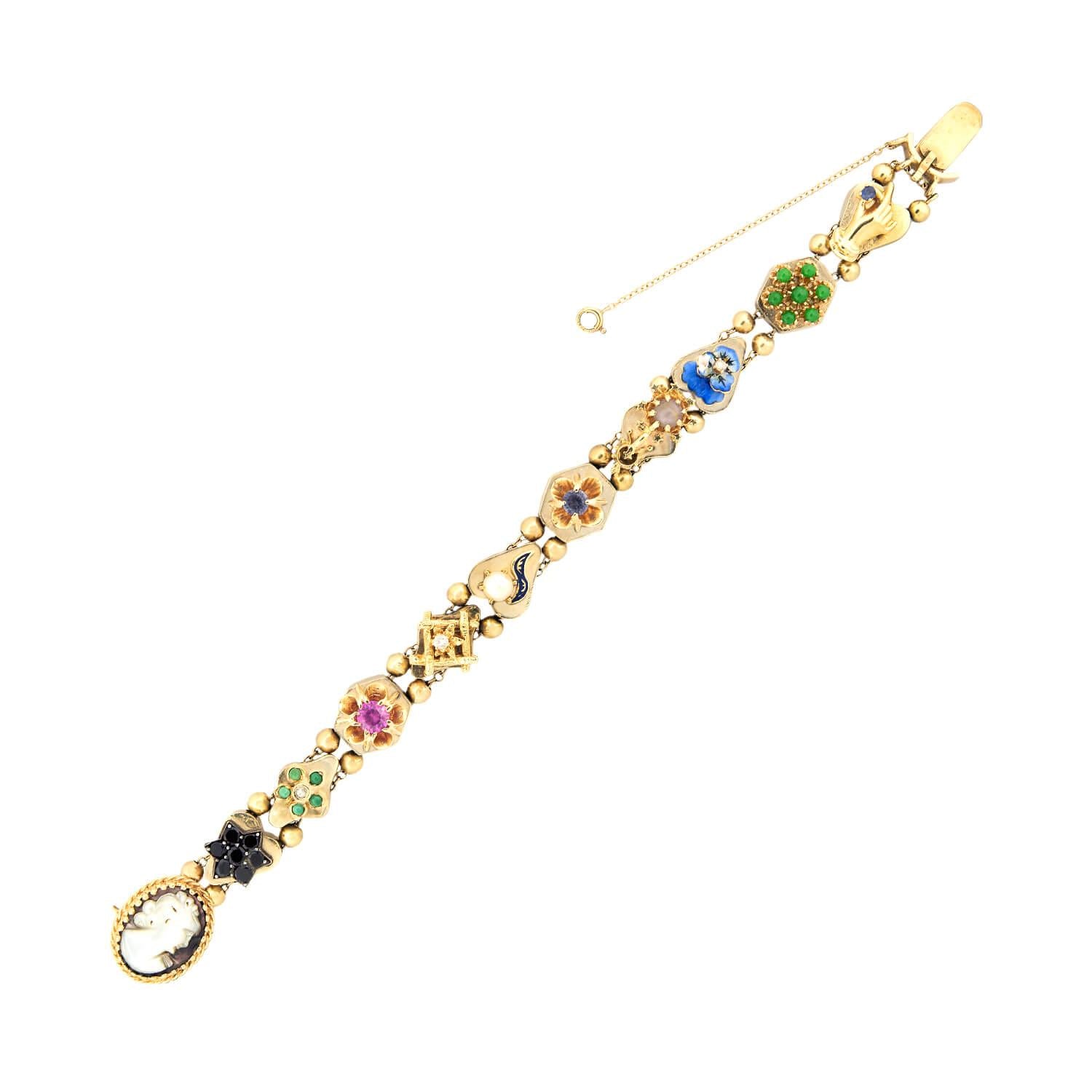
Retro jewelry took its cues from Hollywood. Because platinum was restricted for wartime use, jewelers worked in rose and yellow gold, often in large-scale, sculptural forms with bold curves and scrolls. Big cocktail rings, wide bracelets, ladies' watches with hidden dials, and charm bracelets were worn everywhere, set with citrine, aquamarine, ruby, and synthetic stones alongside diamonds.

Vintage Jewelry (1960s to 1980s)
Vintage jewelry from the 1960s, 1970s, and 1980s broke with tradition. Bright colors, textured and brushed gold, abstract and asymmetrical forms, and oversized proportions defined the period as jewelers experimented freely with materials and scale. Pieces from these decades are highly individual and increasingly collected as mid-century design has come back into fashion.

Estate Jewelry (1980s to Contemporary)
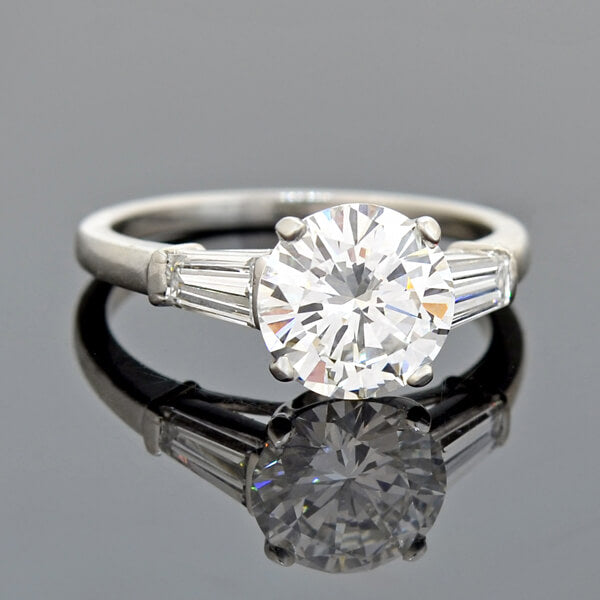
Estate jewelry refers to previously owned pieces, and in our collection it covers the 1980s through today. These designs tend to be timeless and elegant, made with high-value materials such as platinum, 18k gold, and fine diamonds and gemstones. Many pieces offer a modern take on antique styles, which makes estate jewelry a natural fit for anyone who loves the look of the older periods with contemporary wearability.
How to Identify the Period of a Piece
Dating a piece starts with construction. Closed-back settings and foiled stones point to Georgian jewelry, while pin stems, clasps, and hallmarks shift in predictable ways through the Victorian decades. Platinum almost always means Edwardian or later, and the cut of the diamonds (rose, old mine, old European, transitional, or modern brilliant) narrows the window further. Every piece at A. Brandt + Son is dated to its period and condition-graded before it is listed, so you can browse antique diamond jewelry and every other collection with confidence in what you are buying.